Subspecialty direct care: accepting new patients this month · all appointments available within one to two weeks · request an appointment
About Dr. Perry

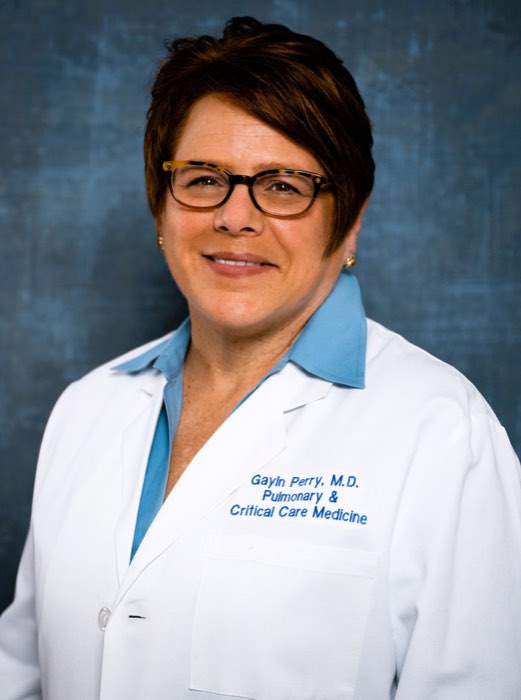
She built the system's best sleep program. Then she left to fix what the system couldn't.

Thirty years of medicine taught Dr. Gayln Perry one thing the hospital model cannot act on: the diagnosis is in the history, and the history takes an hour nobody is given anymore. That is true of a snoring six-year-old, a long COVID patient, and a case three specialists have already missed.

Dr. Gayln V. Perry, MD
GP
★★★★★
4.7 average · 29 Google reviews
The story

Why a hospital sleep and lung director went direct-care

For twelve years, Dr. Perry was the medical director of the Sleep Diagnostic Unit at Children's Mercy Kansas City, where she spent over a decade building the largest pediatric sleep center in the Kansas City area. Families drove hours to see her team. And then waited months to be seen.

That was the problem she couldn't fix from inside: the visits kept shrinking while the waitlists kept growing. Sleep disorders were being tolerated for years, misdiagnosed as ADD, seizures, or mental-health problems, not because doctors don't care, but because nobody gets to the right answer in twenty minutes.

So she removed the thing that shrank the visits (insurance-driven scheduling), and now she gives every patient 60 minutes to tell their history that actually finds the answer. That's the entire business model: fewer patients, more minutes, and the time to actually think.

The hour is not a luxury. It is the diagnostic instrument. Most sleep providers default to ordering a sleep study on new patients; in twelve years running a hospital sleep lab, Dr. Perry ordered the fewest studies of any of her colleagues, because the majority of sleep disorders are answered by a thorough history rather than a test. When a study is warranted she reads it critically, looking at the arousal index, the hypnogram and the sleep-stage distribution, rather than stopping at “you don’t have sleep apnea.” And where others raise the stimulant dose, she asks why the patient is sleepy at all: inflammation, mast cell activation, Ehlers-Danlos Syndrome, viral reactivation, mitochondrial dysfunction. The full case for why that matters →

"Sleep disorders are often unrecognized, tolerated, or assumed untreatable for years without awareness of their potential impact on quality of life or long-term health. By obtaining the right help, sleep problems can be remedied, so we offer hope."
In her own words

Meet Dr. Perry

Under two minutes with the doctor herself: how the practice actually runs, and how quickly you can be seen.

1 minute 47 seconds. Prefer to read? Her full story is below.

The receipts

Thirty years, in order

1984–1988

Baylor University → Texas A&M School of Medicine

BA in Chemistry, then her MD.

1988–1992

Dual residency: Internal Medicine & Pediatrics, UMKC

The rare combination that lets one doctor treat the 6-year-old, the 16-year-old, and the 60-year-old, and follow patients across every age transition.

1996–1999

Pulmonary & Critical Care Fellowship, KU Medical Center

The training behind the pulmonary and long COVID work, and behind reading breathing problems correctly at night.

1999–2009

Associate Director, Pediatric & Adult Cystic Fibrosis Center, KU

A decade managing genuinely complex, chronic, multi-system illness.

2006–2009

Medical Director, Sleep Diagnostic Unit, University of Kansas Medical Center

Her first sleep-lab directorship, held alongside the CF Center role. Where the pulmonary training and the sleep work first came together.

2009–2022

Medical Director, Sleep Diagnostic Unit, Children's Mercy Kansas City

Twelve years leading and building the largest pediatric sleep program in the Kansas City area, on faculty in Allergy, Immunology, Pulmonary & Sleep Medicine. Concurrently an intensivist at Saint Luke's (2012–2014).

2022–Today

Perry Center for Direct Sleep Care

The same specialist, without the waitlist: 60-minute visits, transparent prices, all ages: in-office in Overland Park and by telehealth across Kansas and Missouri.

✓ Sleep Medicine: ABIM, 2009–present · NBPAS, 2019–present; AASM Diplomate since 2005
✓ Adult Pulmonary Medicine: ABIM (2009–2019) · NBPAS, 2019–present
✓ Pediatrics: American Board of Pediatrics (1992–2013) · NBPAS, 2024–present
✓ Internal Medicine: ABIM (1992–2002) · NBPAS, 2024–present
✓ Critical Care Medicine: ABIM (1999–2019)
How she practices

The rules of the house

01

Your time is respected

Appointments start on time and run a full hour. The doctor-patient relationship is the foundation of care; active listening is the first diagnostic tool used.

02

Behavior before prescription

Behavioral and root-cause solutions come first whenever feasible; medication when it earns its place. Patients are educated partners, not passengers.

03

Chronic illness, managed like one

Sleep disorders are chronic conditions with real long-term consequences (a-fib, hypertension, diabetes, stroke risk), and they are followed with that seriousness.

04

Access, by design

All appointments within one to two weeks. Telehealth and in-office options. Direct communication between visits. Cash-basis pricing that costs less than people assume once deductibles are counted.

05

Continuity across a lifetime

Med-Peds training means your 8-year-old's doctor can still be your 18-year-old's doctor, and yours.

06

Prepared before you arrive

Before every visit, research is done on the patient: labs, medical records and questionnaires are reviewed in advance, so the hour is spent on you and not on catching up. Book the consultation →

60 minutes · seen in daysCredit/debit, HSA & FSA accepted
Book a Consultation